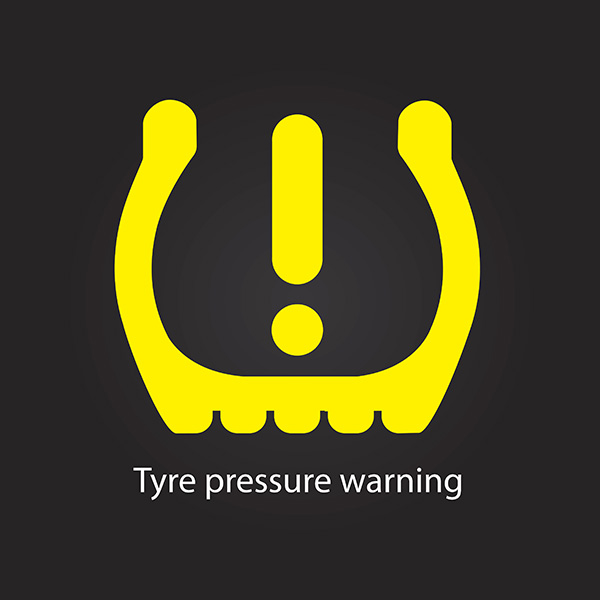
Most drivers have seen the tire pressure light come on at some point. Sometimes it is a simple case of low air in one tire. Other times, the light keeps coming back even after the tires have been filled properly. That is usually when the frustration starts. At our shop, one of the first things we think about in that situation is the TPMS.
TPMS stands for Tire Pressure Monitoring System. Its job is to alert you when one or more tires are too low on air. It is a helpful safety feature, especially because a tire can be underinflated without looking obviously flat. The tricky part is that the system itself can develop problems over time, especially as sensors age.
A failing TPMS sensor can make it hard to tell the difference between a real tire pressure issue and an electronic one. That is why the warning signs matter. If you know what to look for, you are much less likely to waste time guessing or keep driving around with a problem that needs attention.
What TPMS Sensors Actually Do
In many vehicles, each wheel has its own sensor mounted inside the tire. That sensor monitors pressure and sends the information to the vehicle. If the pressure drops too low, the system triggers the warning light on the dashboard.
These sensors are not built to last forever. They contain internal electronics and, in most systems, a sealed battery. Over time, heat, age, moisture, road conditions, and routine tire service all take a toll. Once a sensor starts failing, the system may stop giving accurate information or may trigger warnings that do not match what is actually happening with the tires.
That is when drivers start noticing that something feels off.
The Tire Pressure Light Keeps Coming Back
This is probably the most common sign of a TPMS sensor issue. You add air to the tires, the light goes off, and then a day or two later it comes back on again. At first, it is easy to assume one tire still has a slow leak. Sometimes that is true. But if the pressures are correct and the light still keeps reappearing, a failing sensor becomes much more likely.
This is especially common when the light seems to come on without a clear pattern. The tires are fine one day, the light comes on the next, then it disappears again. That kind of inconsistency often points toward the sensor or the system rather than a simple low-pressure condition.
The Warning Light Flashes Before Staying On
This is one of the biggest clues that the problem may be with the TPMS system itself. In many vehicles, a TPMS warning light that flashes for a short time before staying on is not just warning about low tire pressure. It is warning that the system has a fault.
At our shop, when a customer tells us the light blinks first and then stays on, that immediately changes the conversation. Now we are thinking more about sensor failure, communication problems, or system errors rather than just checking air pressure alone.
If your light flashes and then goes solid, it is worth getting the system checked instead of just topping off the tires and hoping it clears.
One Tire Stops Showing A Reading
On vehicles that display the individual pressure of each tire, a dead giveaway is when one tire suddenly stops showing a reading at all. Instead of giving a pressure number, the system may show dashes, blanks, or a missing value.
When that happens, it usually means the vehicle is no longer receiving a signal from that sensor. The tire itself may be perfectly fine, but the system cannot read it anymore.
This is one of the clearest signs that the sensor battery may be dead or the sensor itself has failed.
The Readings Do Not Match Reality
Another sign of a failing TPMS sensor is inaccurate pressure information. If the dashboard says one tire is dramatically low or unusually high, but a manual gauge shows normal pressure, that is a red flag.
Good sensor data should match what you see with a proper tire pressure gauge, allowing for only small differences. If the numbers are way off, or one tire always reads strangely compared to the others, the sensor may no longer be reliable.
This is one reason we always recommend checking tire pressure with a gauge when the warning light behavior does not make sense. It helps separate an actual tire problem from a sensor problem.
The Problem Starts After Tire Service
Sometimes failing TPMS sensors show themselves right after tire work. A sensor may already be weak and then stop working after a tire rotation, new tires, or seasonal wheel changes. In other cases, the system may need to be relearned after service, or a sensor may have been physically damaged during the process.
That does not mean every tire service causes a sensor problem. It just means that service is often when an aging sensor finally reveals that it is near the end of its life.
If your tire pressure light started acting up right after tire work, it is worth having both the tire pressures and the TPMS system checked instead of assuming it is just a coincidence.
The Vehicle Is Older And The Sensors Are Original
Age matters a lot with TPMS sensors. In many cases, the internal batteries last several years, but not forever. If the vehicle is older and the sensors have never been replaced, it is not unusual for one or more to start failing.
This is especially true when one sensor goes first and the others are likely not far behind. We see this a lot. A customer comes in with one dead sensor, and after checking the rest, it becomes clear the whole original set is getting tired.
That does not always mean all of them need immediate replacement, but it does mean age should be part of the conversation.
Common Signs Of Failing TPMS Sensors
A few of the most common warning signs include:
- The tire pressure light keeps returning even after proper inflation
- The light flashes before staying on
- One tire stops showing a pressure reading
- The dashboard reading does not match a manual gauge
- The issue starts after tire service
- The vehicle has older original sensors
The more of these signs you notice, the more likely it is that the sensor system needs attention.
Why It Matters
It is easy to think of TPMS as a minor convenience feature, but it does matter. If the system is not working properly, you may not get an accurate warning the next time a tire really is low. And if the light is always on for the wrong reason, it becomes much easier to ignore it when there actually is a pressure problem.
Proper tire pressure affects safety, tire wear, fuel economy, and overall handling. A working TPMS helps support all of that by giving you a heads-up before a low tire becomes a bigger issue.
A Sensor Problem Can Look Like A Tire Problem
This is one reason drivers get frustrated. A bad sensor and a slow leak can create similar symptoms on the dashboard. That is why we do not like guessing. We want to know whether the tire is truly losing air, whether the sensor is misreading, or whether the system has a communication fault.
Good diagnosis saves time and keeps you from replacing parts or adding air unnecessarily without solving the real problem.
When It Is Time To Have It Checked
If your tire pressure light is acting strangely, do not wait until it becomes constant background noise. A system that flashes, gives missing readings, or reports pressure that makes no sense should be inspected before you lose confidence in the warning altogether. We can check the tire pressures, inspect the sensors, diagnose the TPMS fault, and help make sure your warning system is working the way it should.
Call us today or stop by Rix Automotive in Mason, OH, to schedule a tire and TPMS inspection.