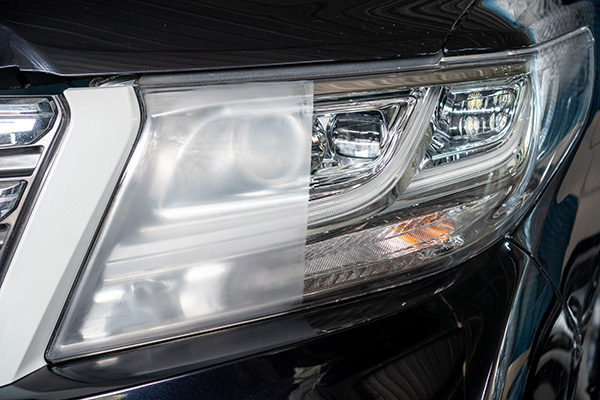
Hazy headlights creep up slowly, so most people do not notice until they drive at night and everything feels dimmer than it should. The lenses might look a little cloudy in daylight, then suddenly you realize the beams are weaker and the front of the car looks older. It is a common issue on vehicles with plastic headlight lenses, and it is usually fixable.
The frustrating part is that the bulbs can be perfectly fine and the headlights still look dull. The lens itself becomes the problem because it is no longer letting light pass through cleanly.
Why Headlights Turn Hazy Over Time
Most modern headlight lenses are made from polycarbonate plastic. It is strong and impact-resistant, which is great for road debris, but it is also vulnerable to UV damage. Over time, the outer surface breaks down and becomes cloudy, scattering light rather than letting it project forward.
Once the surface starts to deteriorate, it also becomes rougher at a microscopic level. That rough surface traps more grime and makes the haze look worse faster, especially if the car lives outside.
Oxidation, UV, And Road Film Build Up
The biggest culprit is oxidation caused by sunlight. Headlights usually have a protective clear layer on the outside, and when that layer wears down, the plastic underneath oxidizes. That oxidation is what gives the lens a yellowed or milky look.
Road film adds another layer to the problem. Dust, salt, bugs, and traffic grime can bake onto the surface, and some harsh cleaners can strip what is left of the protective coating. In the shop, we often see haze that is a mix of UV damage plus a stubborn film that normal washing will not remove.
How Haze Cuts Light Output And Visibility
Haze is not only cosmetic. When the lens is cloudy, the beam pattern gets scattered, which means less light reaches the road where you need it. You may notice reduced visibility on dark roads, reduced side-to-side coverage, and increased glare because the light is no longer focused as it was designed to be.
This can also make it harder for other drivers to see you clearly, especially in heavy rain. Even if your headlights still turn on and look bright up close, the road illumination can be noticeably worse.
Why Some Headlights Haze Faster Than Others
Some vehicles haze faster because of exposure. Parking in full sun every day, living near the coast, or driving in areas with heavy road salt can accelerate lens wear. Heat matters too, because the lens is constantly cycling between hot and cold, and that contributes to surface breakdown.
Past repairs can play a role as well. If a lens was previously restored but not sealed properly afterward, it may haze again quickly. A quick wipe-down might make it look better for a week, then the cloudiness returns because the surface is still exposed and unprotected.
When DIY Cleaning Helps And When It Hurts
If the haze is mild, cleaning can help you see what you are dealing with. Sometimes the lens just has a film from traffic grime and old wax residue, and a careful wash can make a noticeable difference. The risk is using abrasive pads or harsh chemicals that scratch the lens or strip the remaining protective layer.
DIY kits can work, but they are easy to misuse. If the sanding step is uneven, the lens can end up wavy or blotchy, and the light pattern can actually get worse. A quick inspection is the safest first step, because it tells you whether you are dealing with surface oxidation, more serious damage, or a lens that is already compromised.
What A Proper Headlight Restoration Involves
A real restoration usually starts by correcting the surface, not just polishing it. That often means removing the oxidized layer evenly, then refining the surface so it is clear again. The final step is the most important, applying a UV-resistant seal or coating so the lens stays clear instead of hazing again in a few months.
We have seen plenty of headlights that looked good right after a quick polish, then turned cloudy again because the protective layer was never restored. Done properly, restoration brings back clarity and helps the headlights project light the way they should, which is the whole point.
Keeping Headlights Clear Longer
After restoration, the goal is to protect the lens from UV and harsh buildup. Parking in shade when possible helps, and washing the front end regularly keeps bugs and road film from baking on. Avoid strong solvents on the lenses, because they can break down coatings faster than you expect.
This is also a place where regular maintenance makes life easier. When the vehicle is in for routine service, having the lenses checked for early clouding and surface roughness can keep the problem from getting bad again. If you notice the haze returning, handling it early usually means less correction is needed.
Get Headlight Restoration and Replacement In Mason, OH, With Rix Automotive
If your headlights are hazy and night driving feels dim, the next step is to book service so the lenses can be restored and sealed correctly.
Schedule service with Rix Automotive in Mason, OH, to bring back clearer light output and keep the lenses protected so the haze does not come right back.