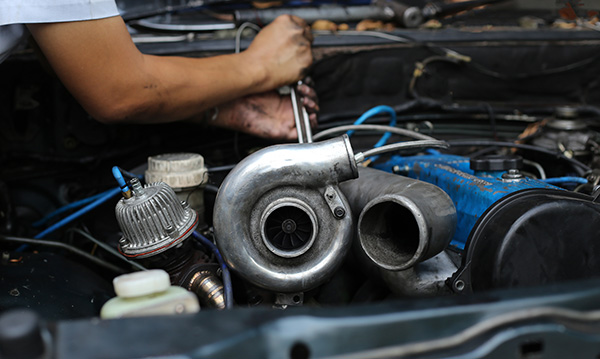
Turbocharged engines make impressive power from relatively small displacement, but that extra performance comes with a challenge. Compressing intake air raises its temperature, and hot air is less dense than cooler air. That means the engine can receive less oxygen than it could if the compressed air were cooled before entering the cylinders.
That is where the intercooler comes in. It sits between the turbocharger and the engine intake, removing heat from the compressed air before that air reaches the combustion chambers. When the system works correctly, the engine can make power more consistently while keeping intake temperatures better controlled.
How the Turbocharger Heats the Intake Air
A turbocharger uses exhaust energy to spin a compressor wheel. That compressor forces more air into the engine than the engine could pull in naturally.
As the air is compressed, its temperature rises. The turbo itself also operates in an extremely hot part of the engine bay, so heat from surrounding components adds to the problem. During hard acceleration or repeated boost, intake temperatures can climb quickly.
The hotter the air becomes, the less dense it is. Cooler air packs more oxygen into the same space, giving the engine more usable air for combustion.
The Intercooler Cools the Air Before It Reaches the Engine
The intercooler works much like a heat exchanger. Compressed air leaves the turbocharger, travels through piping to the intercooler, loses heat, and then continues toward the throttle body and intake manifold.
Most vehicles use one of two basic designs:
Air-to-air intercoolers use outside airflow to remove heat
Air-to-water intercoolers use liquid coolant and a separate heat exchanger
Air-to-air systems are common because they are simple and effective. Air-to-water systems can package more easily in tight engine bays and provide strong cooling under certain conditions, but they add pumps, coolant lines, and another cooling circuit that has to remain healthy.
Why Cooler Intake Air Helps a Turbocharged Engine
Cooling compressed air does more than improve power numbers. Lower intake temperature gives the engine computer more room to manage boost and ignition timing without running into excessive heat.
When intake temperatures become too high, the computer may reduce ignition timing or boost pressure to protect the engine. From the driver's seat, that can feel like the car pulls hard at first and then seems weaker after several accelerations or on a hot day.
At our shop, that change in performance is one clue we pay attention to. It does not automatically mean the intercooler is bad, but it gives us a reason to check airflow, boost pressure, intake temperature, and the condition of the charge-air system.
Leaks Can Reduce Boost Before You Notice the Heat
The intercooler and its pipes have to hold pressurized air. A cracked end tank, loose clamp, split hose, or damaged connection can allow boost pressure to escape before it reaches the engine.
Possible signs include:
- Reduced power during acceleration
- A hissing or whooshing sound under boost
- Oil residue around a loose intercooler connection
- A check engine light
- Boost pressure lower than expected
- The engine working harder to make normal power
A small amount of oily film inside charge pipes can be normal on many turbocharged engines. Heavy oil buildup, however, deserves a closer look because it can point toward another problem in the turbocharger or crankcase ventilation system.
Intercoolers Can Become Restricted or Damaged
An intercooler mounted near the front of the vehicle is exposed to road debris, dirt, insects, and bent cooling fins. If airflow across the core becomes restricted, it cannot release heat as effectively.
Internal contamination can also reduce performance. Oil from a failing turbocharger or excessive crankcase vapor can collect inside the intercooler and coat the passages. During an inspection, we look at the core, hoses, clamps, temperature readings, and boost data rather than assuming the intercooler itself needs replacement.
Physical damage matters too. A front-end impact can bend or crack the intercooler even when the bumper damage looks fairly minor from the outside.
Why the Intercooler Is Especially Important During Hard Driving
A turbocharged engine creates the most heat when it is working hardest. Long uphill pulls, towing, repeated acceleration, or spirited driving keep the turbo producing boost for longer periods.
Without effective intercooling, intake temperature can continue rising from one acceleration to the next. The engine computer may begin pulling power to protect the engine from knock and excessive cylinder temperatures.
Regular maintenance helps because loose charge pipes, damaged hoses, blocked cooling fins, and oil leaks can be found before they noticeably affect performance. Keeping the intercooler system sealed and able to shed heat helps the turbocharged engine deliver the power it was designed to make.
Get Turbocharger And Intercooler Service In Mason, OH, With Rix Automotive
If your turbocharged vehicle has lost power, developed a boost leak, or feels weaker after repeated acceleration, Rix Automotive in Mason, OH, can check the intercooler, charge pipes, turbocharger, and intake system for the source.
Schedule a visit and have the boost system tested before a small air leak or cooling problem starts affecting engine performance.