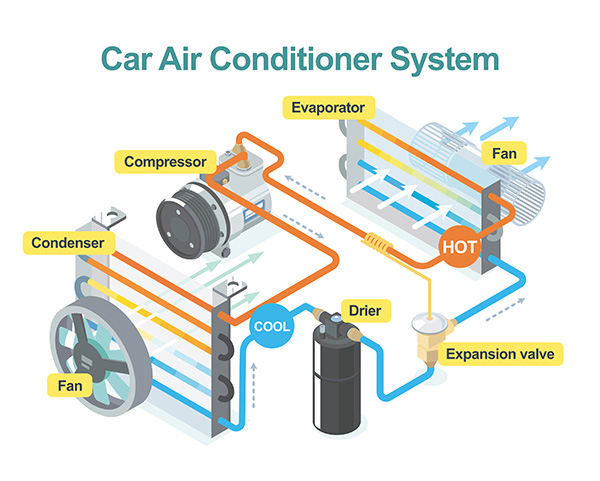
Turning on the air conditioning adds work to the engine. The A/C compressor has to be driven by the belt, and the cooling fans may begin operating at the same time. A healthy engine usually compensates by adjusting idle speed and fuel delivery, so the change should be minor.
When the engine begins shaking, stumbling, or nearly stalling with the A/C on, the added load is exposing a weakness. The cause may be related to the compressor, belt drive, engine mounts, throttle body, ignition system, or the controls responsible for maintaining idle.
The A/C Compressor Adds Load To The Engine
The compressor circulates refrigerant through the air conditioning system. When its clutch engages, or its internal control changes output, the engine has to supply additional power. At idle, that added demand is easier to feel because the engine is already turning slowly.
A brief change in engine tone can be normal. Repeated shaking, a large RPM drop, or a feeling that the engine may stall is not. The problem may become more noticeable while stopped at a light because the vehicle has no forward movement and the engine has less available momentum.
A Worn Compressor Can Create Excessive Resistance
An A/C compressor can become difficult to turn if its internal bearings or moving parts begin wearing. The engine may struggle each time the compressor engages, creating a heavy vibration or noticeable drop in RPM. You may also hear grinding, rattling, squealing, or a sharp clicking sound from the belt area.
A compressor that is beginning to seize can place heavy strain on the serpentine belt, tensioner, and pulleys. Continuing to use the A/C may eventually damage the belt or cause it to come off. Testing can show whether the compressor load is normal or whether the unit is pulling harder than it should.
The Belt And Tensioner May Be Struggling
The serpentine belt often drives the A/C compressor along with the alternator and other accessories. When the compressor engages, belt tension changes. A stretched belt, weak tensioner, worn pulley, or misalignment can create vibration, squealing, or visible belt movement.
The belt may look acceptable from above while the ribs are glazed, cracked, or contaminated by leaking fluid. During an inspection, a technician can watch the belt drive with the A/C cycling and check each pulley for rough bearings or excessive movement. Replacing only the belt may not solve the problem if the tensioner or compressor caused the wear.
Dirty Throttle Components Can Affect Idle Control
The engine computer usually opens the throttle slightly or adjusts airflow when the A/C adds load. Carbon buildup around the throttle plate can limit that adjustment, especially on vehicles with electronic throttle control. The engine may then dip below its normal idle speed and begin shaking.
A dirty throttle body can also cause an unstable idle when the headlights, steering, or rear defroster are operating. Cleaning must be performed correctly because some electronic throttle systems require a relearn afterward. The goal is to restore proper airflow, not simply spray cleaner into the intake without checking the system.
Ignition Problems Become More Obvious Under Load
Worn spark plugs, weak ignition coils, damaged wires, or fuel injector concerns can make one or more cylinders produce less power. The engine may seem acceptable with very little load, but the weakness becomes easier to feel when the compressor turns on.
A mild misfire does not always trigger the check engine light right away. The driver may notice a rough idle, brief stumble, or vibration through the steering wheel. Scan data, ignition testing, and fuel trim readings can reveal a weak cylinder before the problem becomes severe enough to store a fault code.
Engine Mounts Can Make A Normal Load Feel Much Worse
Engine and transmission mounts absorb vibration while keeping the drivetrain properly positioned. As the rubber or hydraulic sections wear, more movement reaches the body of the vehicle. The engine may still be running correctly, but the added A/C load can make the cabin shake much more than expected.
Worn mounts often cause vibration while stopped in drive and less vibration in park or neutral. A clunk during acceleration, braking, or gear changes may appear too. Mount condition should be checked before assuming the engine itself has a major internal problem.
Cooling Fans Can Contribute To The Rough Feeling
The radiator and condenser fans often turn on when the A/C is operating. These electric motors draw considerable current, which increases the load on the alternator. A weak battery, charging concern, poor ground, or failing fan motor can cause voltage to drop and make idle quality worse.
A damaged fan blade or worn motor bearing may also create physical vibration. If the shaking begins exactly when the fan starts rather than when the compressor engages, the fan assembly and electrical system deserve closer attention. Stable voltage is important because the engine computer, ignition system, and throttle controls all depend on it.
Why The Problem May Be Worse In Hot Weather
On a hot day, the A/C system works harder, and the cooling fans run more often. Refrigerant pressure rises, compressor demand increases, and the engine compartment retains more heat. A marginal component may perform acceptably in cooler weather and become obvious during summer driving.
High temperatures can also expose weak ignition coils, aging electrical connections, and worn compressor parts. That is why the problem may seem intermittent. The conditions under which it appears are useful during diagnosis, especially if the engine behaves normally early in the morning.
How Technicians Find The Source
Diagnosis begins by confirming whether the roughness starts with compressor engagement, fan operation, or another electrical load. A technician may monitor RPM, system voltage, fuel trims, misfire data, A/C pressure, and compressor commands while the symptom occurs.
The belt drive, engine mounts, throttle body, ignition system, cooling fans, and charging system may also be checked. Regular maintenance can reduce several common causes, but testing is still needed before replacing parts. The same shaking sensation can come from mechanical resistance, weak combustion, poor idle control, or vibration being transferred through a worn mount.
Get Rough Idle And A/C Diagnostics In Mason, OH, With Rix Automotive
If your engine shakes, stumbles, or nearly stalls when the A/C is turned on, Rix Automotive in Mason, OH, can check the compressor, belt drive, throttle system, engine mounts, ignition components, cooling fans, and charging system.
Contact us to schedule an appointment before the added strain leads to a stalled engine or damaged belt components.