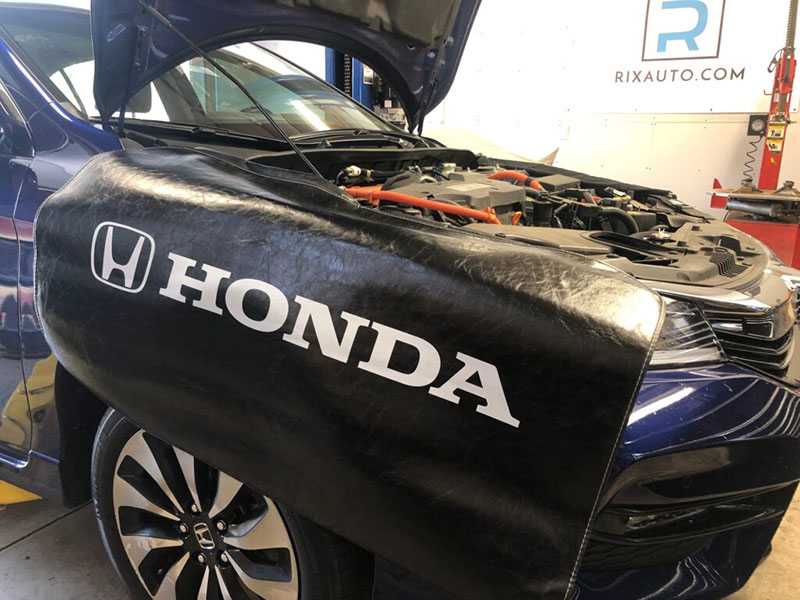
Honda earned its reputation in the US the old-fashioned way. Drivers kept buying the cars, passing them down, commuting in them, teaching teenagers to drive in them, and bringing them in for service with hundreds of thousands of miles on the odometer.
That kind of trust does not happen from one model year.
The Civic, Accord, and CR-V helped shape how many drivers think of Honda: practical, efficient, comfortable, and dependable when properly cared for. Each model has its own personality, but all three share the same basic appeal. They fit real life without demanding much attention until maintenance is skipped.
1. Honda Civic: The Small Car That Grew Up Well
The Honda Civic has always had a practical side. It is easy to park, usually efficient, and simple to live with for commuting, school, errands, and first-time drivers. Older Civics built a loyal following because they were affordable and easy to keep on the road.
Newer Civics feel more refined than many people expect from a compact car. They offer more space, better technology, and stronger performance than the simple economy-car image some drivers still picture. That growth is part of why the Civic has stayed so popular across different age groups.
Like any car, though, a Civic still needs service. Oil changes, brake checks, tire rotations, spark plugs, filters, transmission fluid service where required, and cooling system checks all help protect the car as mileage climbs.
2. Honda Accord: The Family Sedan That Stayed Useful
The Honda Accord became a favorite because it excelled at many things at once. It was roomy enough for family use, comfortable enough for long drives, and efficient enough for daily commuting. Many drivers chose the Accord because it felt like the sensible middle ground.
The Accord also built its name by staying useful over time. It did not have to be flashy to win people over. It needed to start every morning, handle traffic, carry passengers, and avoid feeling worn out too early.
Higher-mileage Accords still need careful attention. Engine mounts, brakes, suspension parts, fluids, batteries, and warning lights should not be ignored just because the car has been dependable so far. Reliability is easier to keep when small wear points are handled before they spread.
3. Honda CR-V: The SUV That Fits Everyday Life
The Honda CR-V found a strong place with drivers who wanted SUV space without moving into something too large. It offers good cargo room, a comfortable seating position, and the kind of everyday usefulness that makes sense for families, commuters, and weekend plans.
The CR-V became popular because it does not feel like too much vehicle for normal driving. Groceries, strollers, sports gear, luggage, pets, and home improvement runs all fit into the picture. That is exactly what many drivers wanted from a compact SUV.
CR-V service often comes down to staying consistent. Tires, brakes, fluids, filters, all-wheel-drive components on equipped models, suspension parts, and battery health all deserve attention. A CR-V may feel easygoing, but it still depends on regular maintenance like any other vehicle.
Why These Three Models Built Trust
The Civic, Accord, and CR-V did not build Honda’s reputation by being perfect. They built it by being useful, familiar, and long-lasting for many drivers. People knew what they were getting: a car or SUV that could handle daily life without feeling complicated.
Another reason these models stayed popular is that they fit different stages of life. A Civic works well for commuting or a first car. An Accord fits families and drivers who want more comfort. A CR-V gives extra space without the size of a larger SUV.
That kind of range helped Honda stay in many driveways for years. A driver might start with a Civic, move to an Accord, then later choose a CR-V when space becomes more important.
Common Honda Service Needs As Mileage Climbs
Even dependable Hondas show wear. Brakes get thin, tires wear unevenly, suspension parts loosen, batteries weaken, and fluids age. Some symptoms appear slowly, so drivers get used to them before realizing the car has changed.
Watch for rough starts, warning lights, vibration, fluid spots, weak A/C, brake noise, uneven tire wear, or changes in shifting. Those signs do not always mean a major repair, but they do deserve a proper inspection.
Service history matters too. If a used Honda has unclear records, start with a baseline check. Knowing the condition of fluids, belts, hoses, brakes, tires, and filters gives you a better plan than waiting for the next warning light.
Get Honda Service In Mason, OH, With Rix Automotive
If you drive a Honda Civic, Accord, CR-V, or another Honda model, Rix Automotive in Mason, OH, can help with maintenance, diagnostics, and repairs that fit your vehicle’s age, mileage, and driving habits.
Schedule a visit and keep your Honda ready for the daily driving that helped make the brand so trusted in the first place.